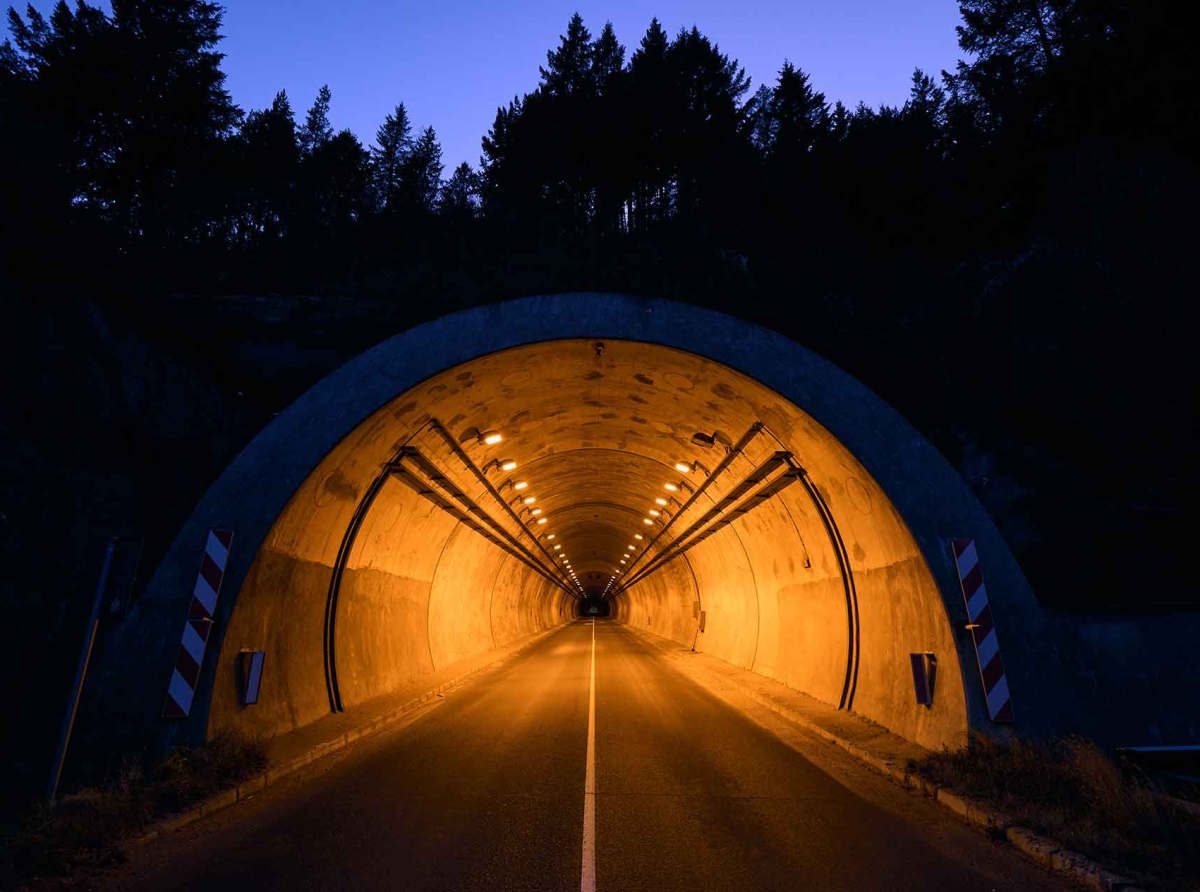

Driving through long Alpine tunnels in your motorhome can feel like entering another world. The roar of the engine reverberates off the smooth concrete walls and the familiar landscape vanishes into darkness. Those who are prepared will master even the longest tubes with confidence.
Vehicle Height and Width
Before entering any tunnel it is essential to compare your motorhome's height and width against the posted restrictions. Many tunnels — older ones in particular — have strict size limits. Measure your vehicle precisely beforehand, including roof-mounted air conditioning units, satellite dishes and aerials.
Older Alpine tunnels can have clearances as low as 3.50 m. For motorhomes with roof-mounted equipment such as air conditioning, satellite dishes or roof boxes, this quickly becomes critical. Check the exact dimensions on your route before setting off.
Safety Features Inside the Tunnel
Alpine tunnels are equipped with important safety features — emergency call stations, ventilation systems and information signs. Take a moment before entering to familiarise yourself with these. Pay attention to the emergency exits and the spacing of the SOS bays.
Ventilation and Fresh Air
In long tunnels air quality can deteriorate rapidly. Make sure your camper's ventilation system is working properly. Set the climate control to recirculation and, if necessary, leave a window slightly open.
Speed and Following Distance
Reduce your speed and maintain a safe following distance. As a rule of thumb, keep at least 150 metres between you and the vehicle ahead. A greater safety margin gives you more reaction time in the event of an unexpected incident.
Lighting
Before entering, check that your headlights and rear lights are working properly. Switch on your dipped beam before the tunnel entrance. Remove sunglasses — your eyes need a moment to adjust to the darkness.
Tips for Claustrophobia
Tunnel Closures
Before you travel, check whether any tunnels are closed. Websites such as ASFINAG (Austria), ASTRA (Switzerland) or Alpen-Paesse provide live traffic information. During peak travel season, queues in front of major tunnels are not uncommon.